About ion exchange resin
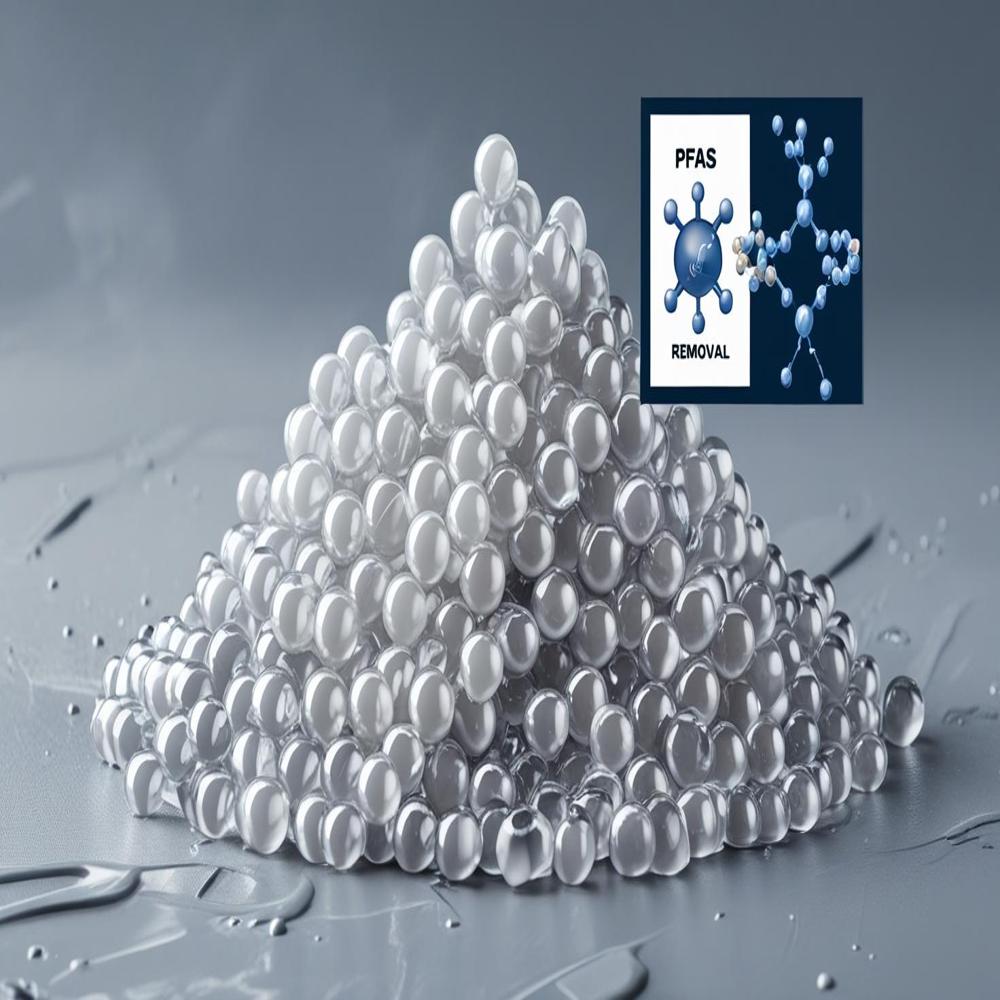
Ion Exchange Resin for water treatment applications, designed for demineralization, deionization, water softening, and purification in industrial and commercial systems. Available in cation, anion, and mixed bed resin types.
Exceptional Purification for Diverse ApplicationsEngineered for municipal, industrial, and laboratory use, this ion exchange resin offers robust purification performance in various environments. Its high exchange capacity delivers effective removal of impurities from groundwater, surface water, and industrial wastewater, ensuring reliable decontamination and softening. The resin demonstrates stable operation across a broad pH range and up to 60C, making it a versatile solution for demanding water treatment challenges.
Advanced Chemical and Physical StabilityWith high chemical resistance and a bulk density of 0.75-0.85 g/mL, this resin remains effective through repeated regeneration cycles, using NaCl, HCl, or NaOH based on application requirements. Its shelf life exceeds two years with proper storage, and the resin's low trace metal release preserves water quality for sensitive applications. The resin's customizable application in beds, columns, or cartridges supports seamless integration into existing water treatment systems.
FAQ's of ion exchange resin:
Q: How is the ion exchange resin used for PFAS removal and water purification?
A: The resin removes PFAS and other contaminants using a dual-function mechanism: sulfonic acid groups target cations while quaternary ammonium groups capture anions. It is installed in columns, beds, or cartridges for continuous purification in municipal, industrial, or laboratory water systems.
Q: What regeneration chemicals can be used with this resin, and how often should regeneration occur?
A: Depending on the contaminants and application, the resin can be regenerated using NaCl, HCl, or NaOH. The frequency of regeneration cycles depends on usage and the level of impurities; typically, the process is carried out when the resin's exchange capacity decreases, as indicated by water quality tests.
Q: Where can this ion exchange resin be installed?
A: Installation is flexible-cartridge, column, or bed systems are all compatible. This versatility allows integration into a broad spectrum of water treatment setups, handling groundwater, surface water, or industrial wastewater purification.
Q: What are the operational benefits of this ion exchange resin?
A: Benefits include high exchange capacity (2.0 eq/L), broad pH and temperature compatibility (0-14 pH, 5-60C), excellent chemical resistance, reusability, minimal trace metal release, and suitability for PFAS removal, water softening, and demineralization.
Q: How should the resin be stored to maximize its shelf life?
A: To maintain its shelf life beyond two years, the resin should be stored in its original lined HDPE packaging, kept in a cool, dry area away from direct sunlight and extreme temperatures. Proper sealing prevents contamination and moisture loss.
Q: What types of water sources is the resin suitable for purifying?
A: The resin effectively treats groundwater, surface water, and industrial wastewater, making it an excellent choice for municipal supply, industrial processes, and laboratory settings demanding high water purity.
Q: When is it necessary to replace or recharge the resin in a water treatment system?
A: Resin replacement or regeneration is necessary when its exchange capacity significantly drops, typically noticeable by reduced purification efficiency or increased contaminant levels in treated water. Regular monitoring ensures optimal performance and longevity.
 Send Inquiry



 Send Inquiry

 Send Inquiry


 English
 Spanish
 French
 German
 Italian
 Chinese (Simplified)
 Japanese
 Korean
 Arabic
 Portuguese